
Fredericksburg Former Owner Sources
Pick the source that fits your clue. A name alone points to directories and obituaries. An address points to the land book. A transfer question needs the deed itself. The Clerk's land records establish recorded conveyances, while the Commissioner's land book shows who was assessed for a period. City directories link names to addresses across years. The Library of Virginia and CRRL collections add dated indexes and local history. Keep each item's date and custodian in view. A directory entry or obituary can tie a person to a house, but only the deed or probate instrument proves that title actually passed.
Fredericksburg's ownership trail blends an online land index with older books, microfilm, plats, local transfer indexes, and assessment records. The public SRA index does not state its oldest year, so treat the known collection dates as archive leads and ask the Clerk where online coverage hands off to an office or archive search.
| Source | Years It Covers | Where Held | What It Shows |
|---|---|---|---|
| Virginia SRA / COVERS index | Current online entries; earliest year not posted | Circuit Court Clerk portal | Party names, instrument type, date, reference, parcel clue |
| LVA Bond Books A and B | 1782-1832; 1832-1850 | Library of Virginia microfilm, reel 40 | Early city bond records |
| Cemetery Company records | 1844-1961 | Library of Virginia, reel 41 | Institutional and cemetery context |
| CRRL Virginiana | Collection dates vary | Central Rappahannock Regional Library | Legal-transfer indexes, directories, tax records, house history |
| City map collection | 1721-1916 map dates listed | Fredericksburg Maps page | Address, lot, and boundary context |
Start with SRA for a recent transfer. Then verify the deed through the Clerk's recording reference. For older ground, ask the Clerk about books and vault material, check LVA reel notes, and search the CRRL local transfer index for an earlier lead. A directory or tax list can place a person at a property in a given year. Names alone prove little. Only a deed, estate instrument, or other legal transfer record establishes a recorded conveyance of title in Fredericksburg.
Fredericksburg Index Cutoff Is Unposted
The public SRA page posts no first year. Fredericksburg deed images and index entries simply lack a stated start date. An empty older search proves nothing. The parcel may still have a deed. Ask the Circuit Clerk which deed books cover the period and how to request older records, and when a web search stalls, note the oldest year searched, the party spellings tried, and the last reference found so the Clerk has a precise range to investigate.
Virginia's SRA page likewise posts no earliest index year. Don't write a guessed cutoff into a chain worksheet. Search what is available. Record the oldest instrument reference returned. Free index-only access may be enabled, while images require Clerk authorization and can carry a fee. For earlier decades, the Circuit Court Clerk can point to deed books or archival access.
The Clerk sits at 701 Princess Anne Street, Suite 100. Office hours run 8:30 a.m. to 4:30 p.m., and the phone is 540-372-1066. Estate matters go by appointment. Requests move faster with a name, an approximate date, an old parcel label, and any book or page reference already found. Bring those details.
GPIN Changes in Fredericksburg History
Legacy numbering can split one chain across two systems. Fredericksburg documents a conversion from tax-map parcel A19-84A to GPIN 7860-90-3994. That crosswalk belongs to its example only. Retain the former TaxMap or MAPID and compare the legal description, street, lot, and recorded plat before tying an older deed to a current parcel. A split or combination can also leave one historic tract spread across several present-day GPINs.
Older deeds rarely show a modern parcel number. Search both labels when the chain crosses a GIS conversion. Keep the original map key in your notes. A legal description may read as a subdivision lot and block, metes-and-bounds calls, or a citation to an earlier instrument. The map key anchors the match.
New recordings must carry the modern GPIN on the first page. The ILS coversheet needs it twice. That rule links newer deeds to present-day GIS. It does not rewrite older indexes. When a historic tax-map key fails in MapInsights, use the GPIN Index Map and ask the Commissioner for a historical land-book cross-reference.
Walk the Fredericksburg Deed Chain Backward
Begin with a known current deed or instrument reference. Follow the grantee backward through earlier grantors. At each step, log the instrument date, parties, document type, GPIN, TaxMap, and legal description. Try variant spellings and entity forms. Parcel fields keep two same-name owners from merging into one. A deed of trust, release, or easement can appear mid-chain without moving ownership, so read the caption and party roles before stepping back further.
Former owners come from the instrument's parties, not a list of occupants. A grantor conveys an interest. A grantee receives it. Start at the latest known conveyance, read the grantor and the cited prior deed, then hunt that grantor as an earlier grantee. Match the legal description at every step, because one name can surface in unrelated filings across Fredericksburg.
- Find the newest deed and record date, grantor, grantee, document type, GPIN, and instrument reference.
- Read the prior instrument citation and legal description; do not rely on the name alone.
- Search the grantor as an earlier grantee and compare the same parcel or lot description.
- Repeat until the index ends, then ask the Clerk about the older book or archive series.
- Mark any executor, trustee, correction, merger, or estate transfer that breaks a simple person-to-person chain.
- Grantor and grantee
- The party conveying an interest and the party receiving it.
- Chain of title
- The ordered record of transfers that links earlier interests to a later grantee.
- Legal description
- The lot, block, or boundary text used to identify land in the instrument.
- Book/page or instrument number
- The Clerk’s reference to locate a deed entry or copy.
Library of Virginia Fredericksburg Reels
The Library of Virginia holds Fredericksburg records on microfilm. Its inventory places Bond Book A, covering 1782 through 1832, on reel 40. Bond Book B sits there too. That second volume runs from 1832 to 1850 and extends the bond series. Reel 41 holds something different. It carries Fredericksburg Cemetery Company records dated 1844 through 1961. Business and corporate materials appear across the later reels.
Reels 91 and 92 work differently. A researcher must request them through Alderman Library at the University of Virginia. Note the exact collection, reel number, and date span first. Then follow whatever access procedure the holding institution requires. For tracing a parcel history, these reels are supporting leads rather than a continuous deed chain.
A bond entry can identify a relationship. A cemetery record can fix a date. A business file can place a person in the city at a particular moment. Any of those clues can point toward land instruments that settle the question of ownership. The Library of Virginia's Fredericksburg microfilm inventory lists every collection and reel.
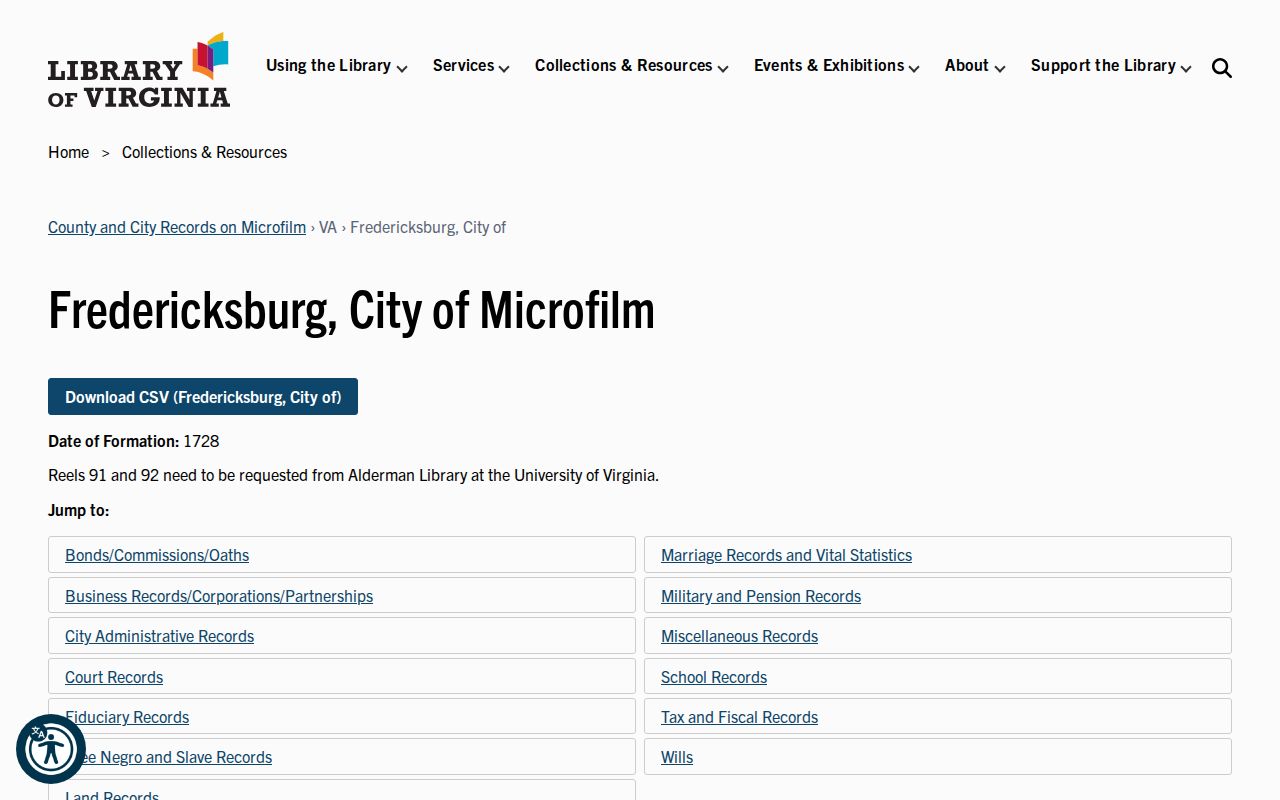
These dates anchor any search into Fredericksburg's earliest records.
CRRL Directories and Transfer Indexes
Central Rappahannock Regional Library packs a great deal into its Virtual Virginiana portal. Researchers find Fredericksburg city directories there. Census-derived inhabitant lists sit alongside them. So do merchant licenses, tax records, and indexes to newspapers and insurance policies. Legal-transfer indexes cover deeds, trusts, and wills. That range makes the portal a natural first stop for address research.
CRRL's special collections go further. House histories, Sanborn maps, cemetery files, family papers, and local court and property records are all available. Obituary and death notices reach back to 1788. A directory works best when you follow one address across nearby years. Learn the publisher's abbreviations as you go. An entry may show an occupation, a household role, or a business at the site.
Those clues describe occupancy and use, not legal title. A transfer index can point toward the deed, trust, or will behind a change in possession. Pull the instrument before naming a former owner. Explore the library's Virtual Virginiana page to begin an address history.
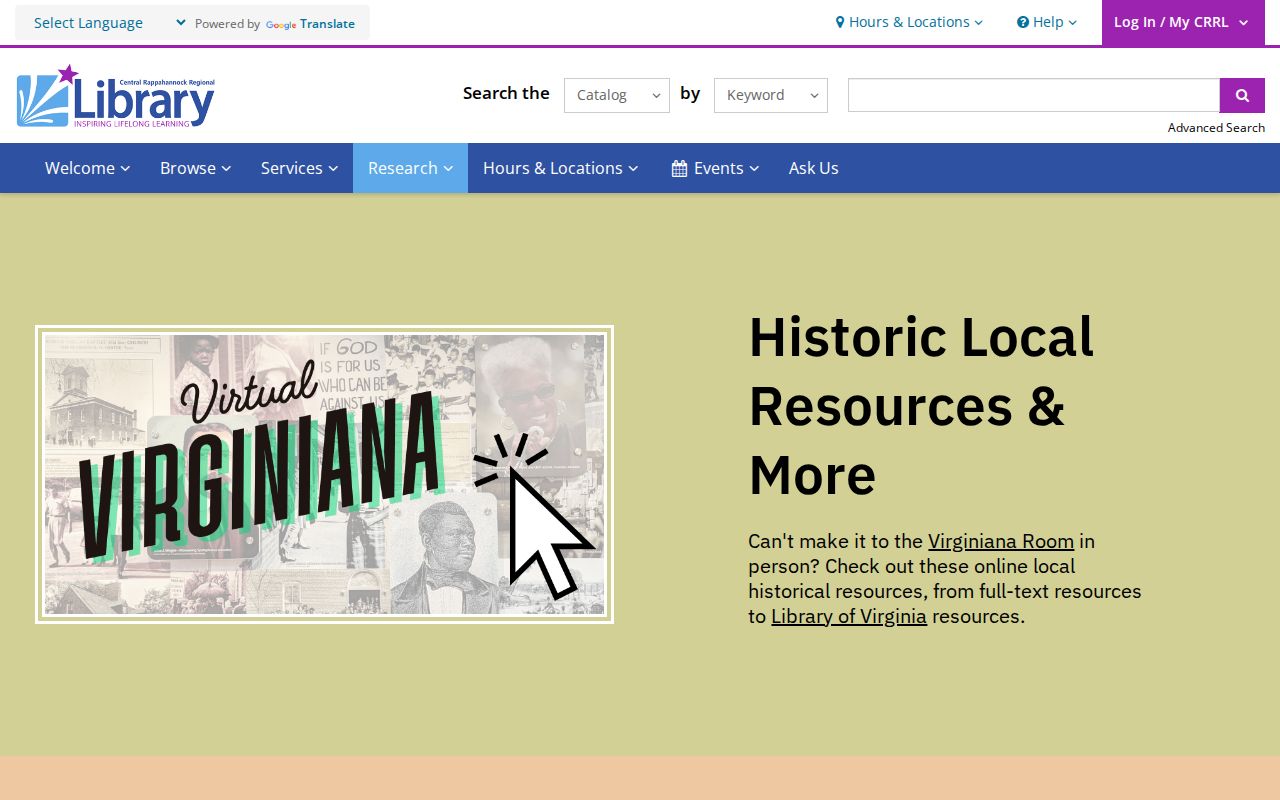
Check address clues against deeds, tax entries, and permits.
Estate Transfers and Former Owners
A death often sends a parcel through an estate. The next deed may name an executor, administrator, heirs, or a trust. Search the grantor and grantee index with those roles in mind, since probate papers and obituary notices help identify the family relationship. Neither source proves a parcel passed to a specific person. Match the legal description and GPIN.
Estate chains take several forms. An executor's deed, an administrator's deed, a court-approved sale, a survivorship transfer, or a deed of distribution can each carry title forward. Fredericksburg estate matters run through the Circuit Court Clerk by appointment. Search the land index for the fiduciary's deed first. A will, qualification, petition to sell land, commissioner report, or final order may sit in the estate file when those records are open.
Vital records have limits. A death certificate or obituary suggests a family link. It does not establish inheritance. Virginia closes birth records for 100 years. Death, marriage, divorce, and annulment records open after 25 years under Va. Code §32.1-271, subject to exceptions. Certified copies carry eligibility and identification rules. Corroborate dates with a vital record, and rely on the estate instrument or deed for the transfer.
How Far Fredericksburg Ownership Reaches
Ownership trails in Fredericksburg reach back far, but not evenly. Each source covers its own stretch of years. The current deed index in the online system posts no stated earliest year. LVA reels cover particular nineteenth-century and later collections. CRRL holds local directories and transfer indexes with their own date ranges. Whatever cutoff you reach, say so plainly in your conclusions. A chain of deeds is only as deep as its weakest link.
The city's record history runs older than its digital tools. Fredericksburg was established in 1728. It incorporated as a town in 1781. It became an independent city in 1879. LVA's bond books begin in 1782. The City map archive lists early town maps alongside later street maps. For any given parcel, though, the deed chain you can actually build depends on which instruments survived. It also depends on how the land was described over time.
When the web index stops returning a useful match, go to the Clerk. Ask about older books, vault material, and image access. Then lean on LVA and CRRL to bridge the gap by name or address. Fredericksburg suffered no courthouse-wide records loss. So never blame a missing result on destroyed deeds without confirming that first. A missing year or book may simply sit in a volume the online index does not reach. The Clerk can point you to it. A responsible property history states exactly what was searched and where coverage stays uncertain.
Lawful use. Use Fredericksburg ownership history for house history, title research, and property due diligence. Do not use names, addresses, or family details to track, intimidate, or harass a living person.