
Fredericksburg Deed Records by Type
Know what the instrument does first. A deed transfers an interest. A deed of trust secures a loan. A release can discharge that security. An easement grants a limited right across land. An assignment moves a recorded interest from one holder to another. Plats and correction instruments can clarify a legal description without signaling any new sale. Record the document type before reading the parties. The word owner may not fit every person named in a land-record result.
Fredericksburg's Circuit Court Clerk records land instruments through Virginia's COVERS and Secure Remote Access path. Each type carries meaning. A deed names its parties and describes the interest conveyed. A release or certificate of satisfaction records a later event tied to an earlier loan. Treat the type as a clue. Then read the full document and any prior instrument it cites. The public text page does not post the exact local dropdown list. Do not assume every Clerk label matches a generic list.
| Deed Type | What It Does | Common Use |
|---|---|---|
| General warranty deed | Conveys the described interest with broad title covenants | Ordinary conveyance; read its legal description |
| Special warranty deed | Limits the grantor’s title promise to the grantor’s period | Some sales and entity transfers |
| Quitclaim deed | Transfers whatever interest the grantor holds | Family, trust, or title cleanup |
| Executor or trustee deed | Transfers through a fiduciary | Estate, trust, or foreclosure event |
| Deed of trust / satisfaction | Creates or releases a security interest | Loan and later payoff record |
A conveyance and an encumbrance answer different questions. A deed records a transfer of title. A deed of trust, judgment lien, mechanic's lien, easement, or lis pendens can affect or describe an interest without moving the fee. A later certificate of satisfaction or release often refers back to an earlier instrument number, and those cross-references matter. Follow them instead of treating the newest document as the only one that counts. The parcel's full story usually spans several recorded pages.
Virginia SRA Deed Index Access
The SRA entry is an index lead, nothing more. Index searching may be free where a Clerk enables it. Images are different. They can require a subscription or separate Clerk access. The public material does not publish the earliest year indexed or a local copy fee. An entry may appear but the document will not open. Note the instrument number, date, party names, and type. Then ask the Fredericksburg Circuit Court Clerk which request method applies.
COVERS and Virginia Secure Remote Access are the doorway to Fredericksburg land records. The Clerk may turn on free index-only access. Each Clerk controls viewing images. It can require an authorized subscriber agreement plus payment. The public pages state no earliest online Fredericksburg index year. They give no exact image price or full document-type menu. The portal may hide the instrument image. Contact the Clerk then, rather than treating the index row as a stand-in for the deed itself.
| Index Field | What to Capture | Why It Matters |
|---|---|---|
| Grantor / grantee | Every party name and role | Builds the transfer chain |
| Document type | Deed, deed of trust, release, plat, lien | Separates transfer from encumbrance |
| Recording date | Date accepted into the land record | Places the filing in sequence |
| Instrument reference | Instrument number or book and page | Points to the copy or archive |
| Parcel and description | GPIN, TaxMap, legal text | Confirms the property match |
The Virginia Land Records SRA page explains the split between free index access and subscriber image access.
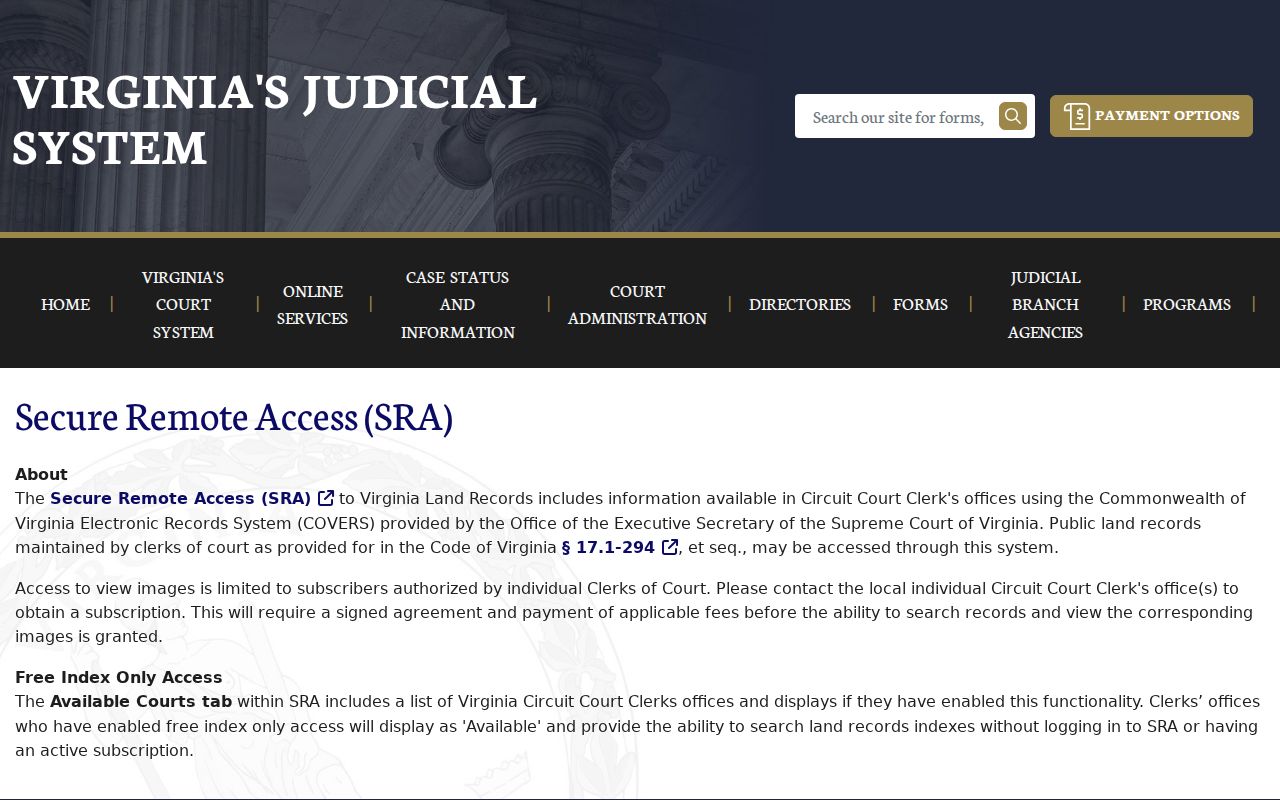
Record the instrument number and date even when the image must be requested another way.
GPIN on Fredericksburg Coversheets
The GPIN requirement supports accurate indexing across the land record and the tax map. The Clerk wants the number on the first page. It must also appear on both the parcel-identification and tax-map lines of the ILS cover sheet. When you review an existing instrument, look closely. Check whether it carries the current GPIN, a former TaxMap reference, or both. The identifier makes a property search more precise. Still, the deed’s legal text controls what is conveyed, and a parcel number alone does not define a boundary.
Fredericksburg requires VLRCS coversheets for land recordings. The Clerk places the GPIN on the first page of every recording. It also goes on both the parcel-identification and tax-map lines of the ILS coversheet. The office also posts a 3 p.m. last-recording cutoff. Those local details make the GPIN more than a map label. It is the bridge from a deed entry to the tax parcel and the GIS result.
When reading an older instrument, keep the tax-map wording exactly as it appears. A City conversion changed parcel A19-84A to 7860-90-3994. Both numbers may matter if an index predates the conversion. A legal description carried forward from a plat may also need the old number. When an instrument lacks a cross-reference, use the legal description. Then ask the Clerk or the Commissioner to identify the matching parcel rather than guessing.
For GPIN and recording guidance, turn to the official Fredericksburg page of the Circuit Clerk.
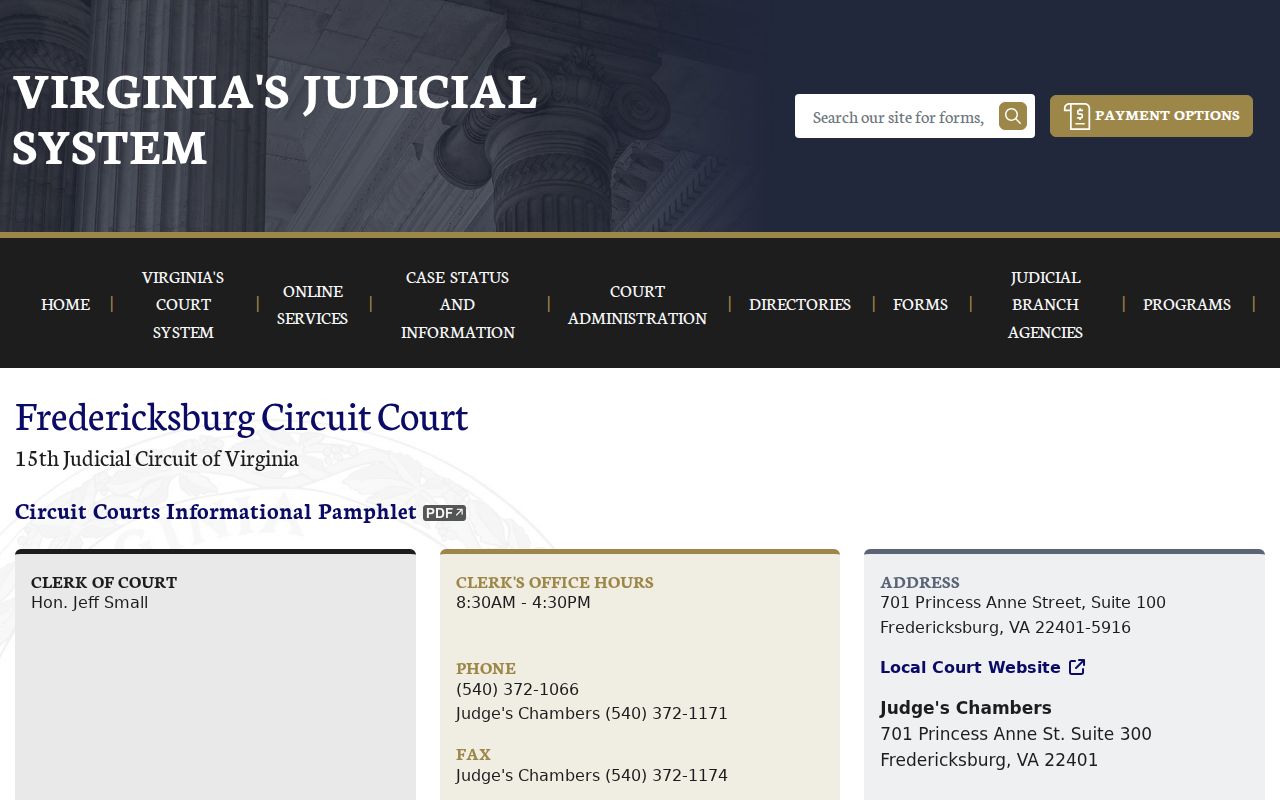
Keep every identifier in the chain worksheet. That includes a former TaxMap value that no longer appears in the current viewer.
The Fredericksburg Grantor-Grantee Trail
Think of a deed chain as a trail you walk in both directions. A grantee on one instrument often shows up as a grantor on a later one. But a shared name proves nothing by itself. Match the instrument dates, the GPIN, the legal description, and the document type. Match any plat the filing references. One deed may transfer only part of a parcel. Another may deal with an easement or a lien. A deed of trust names parties in a security relationship and is not a sale. Keep a dated list of references. Only then decide which document is the next true link in ownership.
The terms are simple. A grantor conveys an interest, and a grantee receives it. Working backward, the grantor-grantee index carries you from the newest deed you can identify. It leads to the earlier instrument that vested title in that grantor. Start with the newest deed, never a name-only hit. Compare the parcel reference and legal description. Only then trust any link. The same person can appear in several unrelated Fredericksburg filings.
- Locate the most recent deed and note the grantee, grantor, date, instrument number, and GPIN.
- Search the grantor as a grantee in an earlier filing, matching the same legal description or parcel clue.
- Repeat backward, recording each deed type and any trustee, executor, merger, or correction event.
- When the online chain ends, ask the Clerk which deed books, microfilm, or archive access covers the older period.
- Grantor
- The person or entity conveying the stated interest.
- Grantee
- The person or entity named as recipient of that interest.
- Chain of title
- The ordered set of recorded conveyances used to trace ownership.
- Book/page or instrument number
- Clerk references used to find a record or image; preserve whichever appears.
Fredericksburg Records Before the Web Index
Older Fredericksburg research spreads across several collections. The Library of Virginia holds Bond Books A and B on reel 40 and Cemetery Company records on reel 41; reels 91 and 92 sit at UVA's Alderman Library and must be requested there. The Central Rappahannock Regional Library, meanwhile, indexes deeds, trusts, wills, directories, and tax records. Archival finds like these can explain names and relationships. When the question is whether an owner actually conveyed a parcel, though, return to the Circuit Clerk's original instrument.
The public SRA page does not state the earliest Fredericksburg deed year available online. Ask the Clerk which older deed books or vault records cover the date in question. The Library of Virginia inventory gives specifics: Bond Book A covering 1782-1832 and Bond Book B covering 1832-1850, both on reel 40, plus Fredericksburg Cemetery Company records from 1844-1961 on reel 41. Reels 91 and 92 require a request through Alderman Library at the University of Virginia.
The Central Rappahannock Regional Library also lists local transfer indexes for deeds, trusts, and wills, along with directories, tax records, historic property files, and newspapers. An index or directory is a lead. It is not the signed instrument. Record the collection name, reel, date span, and page reference before you move back to the Clerk's land record.
The Library of Virginia Fredericksburg inventory lists the reels itemized here.
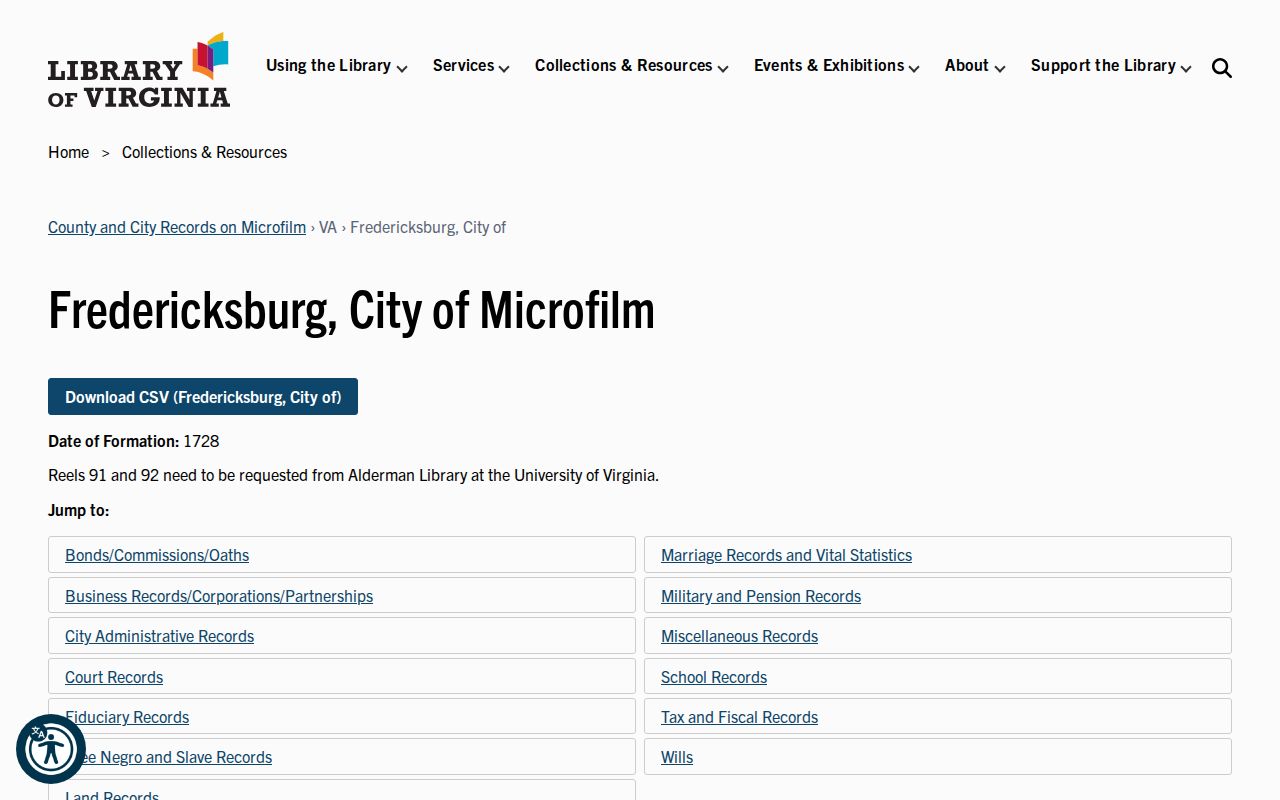
Modern online indexes only reach so far back. Fredericksburg's post-incorporation archive can carry a parcel trail into the nineteenth century, and it fills the gap when the web index runs out.
VADeed Alert for Recorded Filings
Fredericksburg's Circuit Clerk launched a free, voluntary VADeed Alert service in March 2026. Enroll a name or a Tax Map/Parcel ID. When certain land documents match, the system sends an email. An alert is a notice to inspect a record. It does not prevent recording, adjudicate fraud, or confirm a document's legal effect. Use it to locate the underlying entry. Then compare the parties, instrument type, recording date, and GPIN in the Clerk's index.
The Clerk's alert instructions link to the state enrollment system. Save confirmation of the exact name and parcel key you entered. A notice may look unfamiliar. Verify it through the official court system and the Clerk's published contact details. Never call a number supplied only by an unexpected letter or message. The Clerk's own number is the safe route. The appropriate local law-enforcement channel handles suspected fraud.
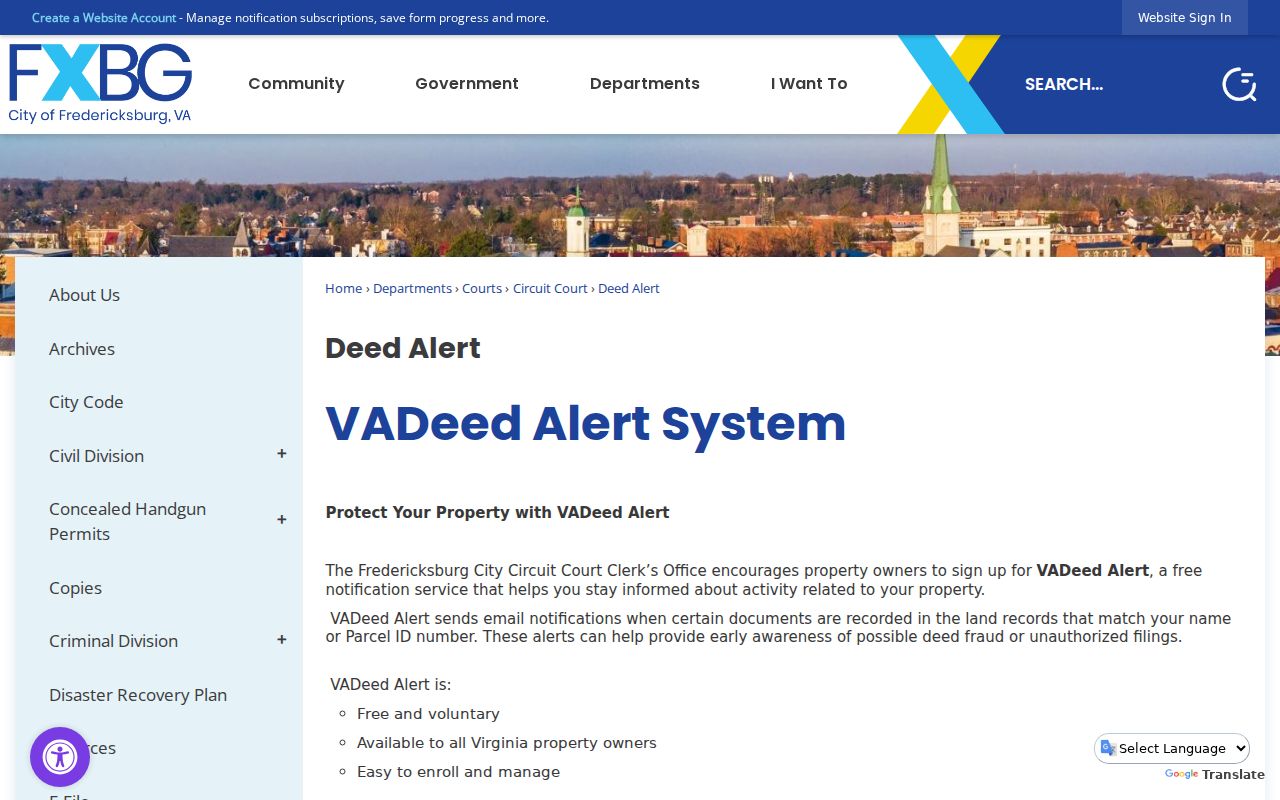
Alert messages are an early-warning aid; the recorded instrument remains the source to verify.
Get a Fredericksburg Deed Copy
The Circuit Court Clerk's land-record office sits at 701 Princess Anne Street, Suite 100. Hours are 8:30 a.m. to 4:30 p.m. on weekdays. The last recording cutoff is 3 p.m. Estate matters require an appointment. Before visiting, gather the party names and the approximate date. Also bring an instrument or book reference, the current GPIN, and any historical TaxMap label. A clear reference helps staff separate a deed from a similarly named instrument. Ask about the current copy process. No fee schedule is posted online, so confirm cost and delivery options with the Clerk directly.
If SRA shows only an index entry, ask the Clerk about an office copy. You can also ask about the image-access path. The Clerk's public page lists the phone as 540-372-1066. A subscription image, a plain copy, and a certified copy are three different products. The published page does not carry a complete fee schedule, so price each option before ordering.
Give the office the recording date, the parties, and the instrument number or book/page reference. Add the GPIN or legal description. If the reference is unknown, describe the parcel and the approximate date. Then ask how the Clerk can search it. Keep an index printout with your copy request. That small step speeds everything up.
Recorded, not guaranteed. Fredericksburg deed records show instruments accepted into the land record; an index match is not a title opinion, and an unrecorded or unreleased interest may remain. A title professional reviews the full chain before a buyer relies on clear ownership.
Plats and Other Land Instruments
A recorded plat shows lot dimensions and subdivision references that a parcel viewer simply cannot. Different instruments answer different questions. A zoning map names the district. A site plan shows proposed or reviewed development. A recorded final plat may actually define the lots themselves. Fredericksburg still requires paper filing for major site plans and final subdivision plats. Online uploads continue, though. When a deed cites a map, write down the book, page, or plan title. Then ask the responsible office how to obtain it.
Deeds can point to many land instruments. Think plats, resubdivisions, lot-line adjustments, dedications, road vacations, and easements. Record the plat name, lot and block, date, surveyor, and Clerk reference whenever one appears. Lay that record beside the GPIN Index Map. Compare it to the modern parcel shape. If a split or merge changed the parcel number, keep the old number in your chain worksheet. Do not overwrite it.
The Clerk's index reaches beyond deeds. Judgments, mechanic's liens, lis pendens, and releases all appear there. A lis pendens signals a pending claim. It does not prove the claimant won. A deed of trust can linger in the index after payoff until a satisfaction gets recorded. Search the parties and the parcel description for the later release. Then read the instrument that resolves the entry. For map context, the Fredericksburg parcel map collection helps place a plat reference. But GIS cannot settle a boundary dispute.